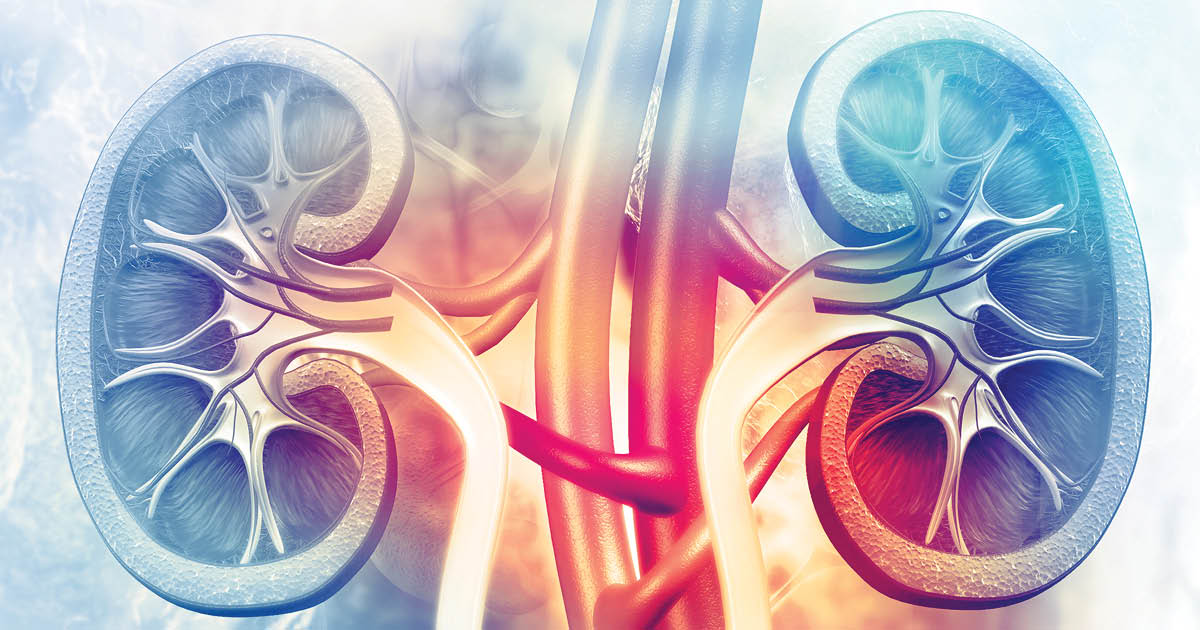
The Whole Kidney and Caboodle: Incorporating Guideline-Based Recommendations to Identify and Manage Chronic Kidney Disease and Reduce Cardiovascular Risks
ACPE Number:0204-0000-25-415-H01-P Content Release Date: February 19, 2026 Expiration Date: February 19, 2027 Activity Type: Application-based CE Credits: 1.5 contact hours (0.15 CEUs) Activity Fee: Free
Activity Overview
Most patients with chronic kidney disease (CKD) are unaware they have it. Guidelines have established well-known risk factors for CKD to help identify and screen patients, but many patients remain unscreened and untreated. Untreated CKD can lead to kidney disease progression, cardiovascular disease, morbidity, and mortality. As the most accessible healthcare professionals, pharmacists often interact with patients at risk for CKD when managing their chronic disease care or medications, uniquely positioning pharmacists to identify and screen patients at risk for CKD. Pharmacists can ensure patients are receiving guideline recommended care for CKD to improve outcomes and reduce cardiovascular risks. Pharmacists can also bridge care for patients with CKD and other cardiovascular-kidney-metabolic conditions through multidisciplinary collaboration and holistic care. This educational activity will present the cardiovascular risks of CKD and discuss approaches to identify and screen patients at risk for CKD. Patient cases will be utilized to illustrate the appropriate guideline-recommended care of CKD. Real-world examples of best practices in multidisciplinary care and patient education will be shared to equip and inspire pharmacists to bridge gaps across the cardiovascular-kidney-metabolic spectrum.
*Please note, this activity was presented live on December 9, 2025 as part of the ASHP 2025 Midyear Clinical Meeting & Exhibition. You can only claim credit once for this activity; live or home study.
The American Society of Health-System Pharmacists is accredited by the Accreditation Council for Pharmacy Education as a provider of continuing pharmacy education with Commendation.
This activity was planned to meet the educational needs of pharmacists who practice in hospitals, health systems, community pharmacies, and ambulatory clinics who care for or are interested in the care of patients with chronic kidney disease.
At the conclusion of this activity, participants should be able to:
Apply guideline recommendations to identify and screen patients at risk of CKD using both uACR and eGFR to provide early identification, early access to treatment, and reduce the risk of kidney disease progression and adverse cardiovascular outcomes.
Analyze guideline-based recommendations and clinical evidence for current and emerging therapies to reduce the risk for CKD progression as well as cardiovascular risks.
Prioritize opportunities within healthcare systems to bridge care and provide holistic, individualized care for people at risk for/with CKM syndrome.
Katie Cardone, PharmD, BCACP, FNKF, FASN, FCCP Professor and Chair, Department of Pharmacy Practice Albany College of Pharmacy and Health Sciences Albany, New York
Katie Cardone, PharmD, BCACP, FNKF, FASN, FCCP is professor and chair of the Dept of Pharmacy Practice at Albany College of Pharmacy and Health Sciences. Dr. Cardone’s clinical and research interests are focused on improving outpatient care of people with kidney disease. She is part of the leadership of the Advancing Kidney Health Through Optimal Medication Management initiative and is the lead author of the practice standards for pharmacists working in kidney settings. Dr. Cardone is a fellow of the National Kidney Foundation, the American Society of Nephrology, and the American College of Clinical Pharmacy.
Lavinia Salama, PharmD, BCACP, BCGP, BC-ADM, CDCES Clinical Assistant Professor – Long Island University, Arnold & Marie Schwartz College of Pharmacy and Health Sciences Ambulatory Care Clinical Pharmacist – One Brooklyn Health, Pierre Toussaint Health Center Brooklyn, New York
Lavinia Salama, PharmD, BCACP, BCGP, BC-ADM, CDCES, is a Clinical Assistant Professor of Pharmacy Practice at Long Island University (LIU) – Arnold & Marie Schwartz College of Pharmacy and Health Sciences in Brooklyn, NY. She practices as an ambulatory care pharmacist at One Brooklyn Health University Hospital Medical Center under a collaborative practice agreement, where she manages diabetes, obesity, and other chronic conditions with a focus on comprehensive cardiovascular-kidney-metabolic (CKM) care. Dr. Salama earned her PharmD from Albany College of Pharmacy and Health Sciences (ACPHS) and completed a PGY1 pharmacy residency at Mercy Hospital Southeast in Cape Girardeau, Missouri, followed by a PGY2 residency in ambulatory care at ACPHS in Albany, New York. She is board certified in ambulatory care pharmacy, geriatrics pharmacy, and advanced diabetes management, and is a certified diabetes care and education specialist. An advocate for interdisciplinary education, Dr. Salama teaches pharmacy students in didactic courses and ambulatory care and endocrinology-focused rotations, mentoring them in complex case management, technology integration, and patient-centered care. She also enjoys mentoring medical residents and working closely with an interdisciplinary care team. Her research and professional interests include improving access to diabetes technology, advancing lifestyle medicine initiatives, and optimizing CKM care in underserved populations. Dr. Salama is an active member of ACCP, ASHP, ADCES, and STFM, and currently serves as Chair-Elect of the ACCP Nephrology PRN for 2025–2026.
Jeffery S. Vender, MD, MCCM, MBA is the Emeritus, Harris Family Foundation Chairman of the Department of Anesthesiology at NorthShore University Health System in Evanston, Illinois and a Clinical Professor at the University of Chicago Pritzker School Of Medicine in Chicago, Illinois. He is a past member of the NorthShore University Health System Faculty Practice Associates Board of Directors, Past Chair of the Medical Executive Committee for the Professional Staff at NorthShore and previously served on Northshore’s Board of Directors. Dr. Vender served as Chair of Anesthesia from 1990-2015 and received an appointment of adjunct Professor of Biomedical Engineering at Northwestern University. He served as the Director of the Critical Care Services at Evanston Hospital from 1987-2000 and the Interim Chairman at Northwestern University Department of Anesthesiology from July 1999 until October 2000. Dr. Vender has participated and Chaired numerous state and national committees of various medical organizations, edited several medical texts, has published over 135 articles and book chapters and has been an invited lecturer at over 250 national and international meetings on topics of anesthesiology, critical care, organizational change, and leadership. In addition, Dr. Vender serves as an editor and/or reviewer for many medical journals.
In accordance with our accreditor’s Standards of Integrity and Independence in Accredited Continuing Education, ASHP requires that all individuals in control of content disclose all financial relationships with ineligible companies. An individual has a relevant financial relationship if they have had a financial relationship with an ineligible company in any dollar amount in the past 24 months and the educational content that the individual controls is related to the business lines or products of the ineligible company.
An ineligible company is any entity producing, marketing, re-selling, or distributing health care goods or services consumed by, or used on, patients. The presence or absence of relevant financial relationships will be disclosed to the activity audience.
The following persons in control of this activity’s content have relevant financial relationships:
All other persons in control of content do not have any relevant financial relationships with an ineligible company. As defined by the Standards of Integrity and Independence in Accredited Continuing Education definition of ineligible company. All relevant financial relationships have been mitigated prior to the CE activity.
To receive CE credit, complete the steps below within 60 days of completing the activity.
View the entire presentation and answer all polling questions.
Click "Complete Activity" on last slide then complete the evaluation to claim credit.
Verify credits were successfully transferred to CPE Monitor before the ACPE 60-day deadline by checking your NABP eProfile account.
Important Note – ACPE 60 Day Deadline Per ACPE requirements, CPE credit must be claimed within 60 days of being earned – no exceptions! To verify that you have completed the required steps and to ensure your credits have been reported to CPE Monitor, we encourage you to check your NABP eProfile account to validate your credits were transferred successfully before the ACPE 60-day deadline. After the 60 day deadline, ASHP will no longer be able to award credit for this activity.
Provided by ASHP.
Supported by an independent medical educational grant from Boehringer Ingelheim Pharmaceuticals, Inc.